

What building 15 apps taught me about shipping software
After building 15 apps, these are the lessons that separate AI-generated prototypes from reliable software a solo founder can genuinely ship.
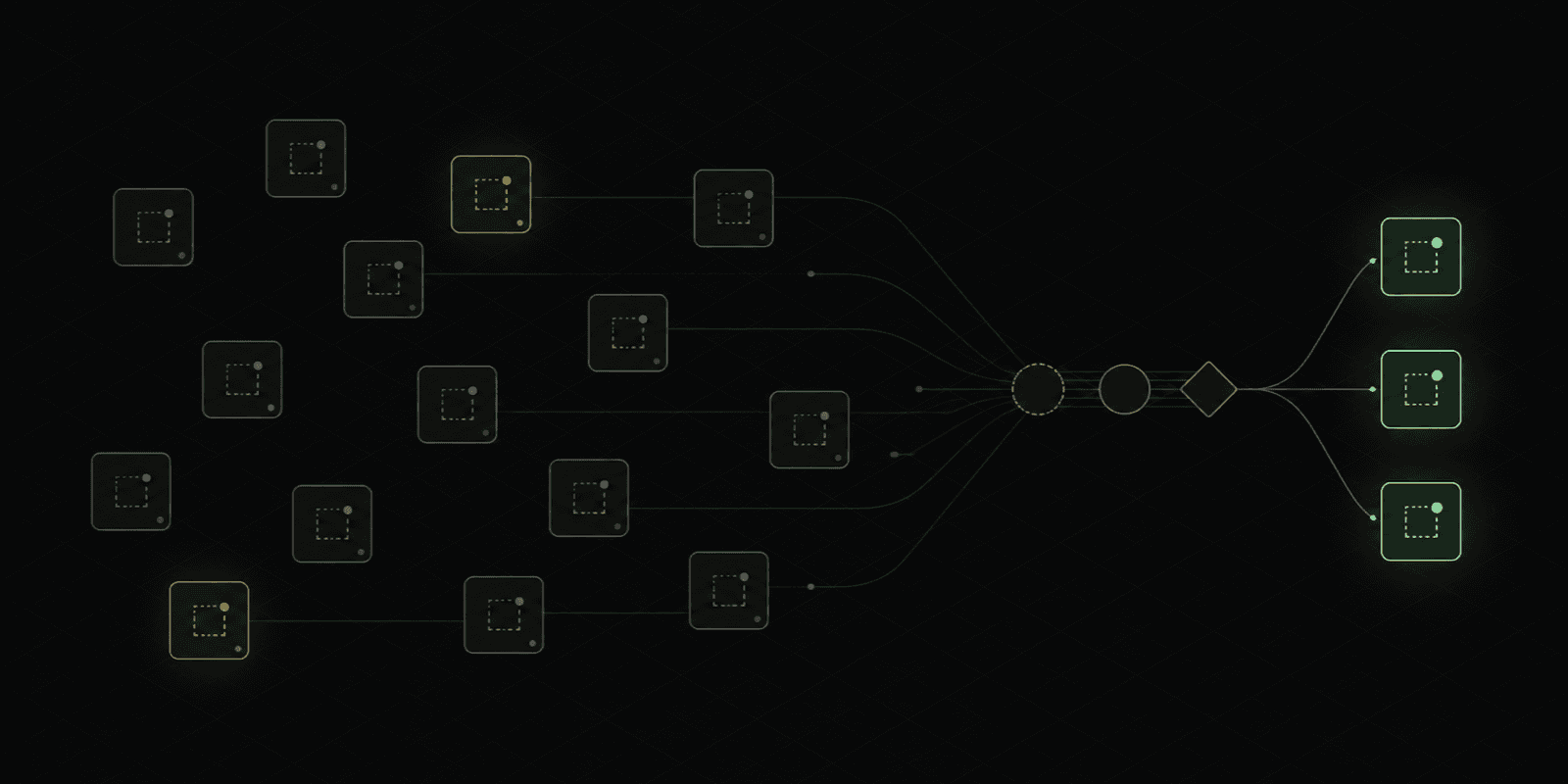
TL;DR — AI made it possible for one person to build far more software than would have been realistic a few years ago. It did not make every build a product. After reviewing fifteen serious app projects, the consistent lesson was that code is now the fast part. Shipping still means choosing a real problem, cutting scope, making the unglamorous systems dependable, finding users and accepting when a project should stop.
A recent reorganisation of the York Studio workspace surfaced fifteen Git repositories, several more experiments, multiple rewrites and a few products that are actually live. That is not the same thing as having built fifteen businesses.
Some had polished interfaces but no dependable route to a customer. A few reached production. Others became evidence for the next attempt. Several were versions of the same idea because rebuilding felt easier than deciding which version deserved to survive.
Together they made the distinction clear: building software and shipping software are no longer the same skill.
For a solo founder, shipping software means delivering a complete, dependable path from a real user's problem to a supported outcome—including access, data, billing, failure handling, deployment and distribution. A prototype proves that an interface or workflow can exist. A shipped product proves that people can trust it.
AI can scaffold a product, explain an API, draft tests and turn a rough instruction into a convincing interface. That leverage is central to how we build like a team of one.
But the faster code arrives, the easier it is to mistake visible progress for commercial progress. Here is what fifteen builds taught us about the gap.
1. What AI changes for solo-founder software development
The old bottleneck was turning an idea into software. The new one is deciding what it should do, must never do and whether it deserves to exist.
In the 2025 Stack Overflow Developer Survey, 52% of respondents said AI tools or agents had improved productivity. Yet more developers distrusted AI accuracy than trusted it, and 66% named solutions that were "almost right, but not quite" as their biggest frustration. That describes our experience: AI removes blank-page work but does not own consequences.
It can write a webhook handler. It does not know whether processing an event twice would corrupt a revenue ledger. It can propose five architectures; it cannot decide which one a solo founder will still understand six months later.
The founder's highest-value work is now framing the problem, defining invariants, rejecting scope, checking results and deciding when evidence supports continuing.
2. Prototype vs production: why the last twenty per cent matters
The first eighty per cent of an app is now astonishingly fast. It is also the part that looks best in screenshots.
A prototype can have navigation, charts and authentication screens. It can feel finished because every visible route exists. But software becomes a product in the invisible twenty per cent:
- permissions that prevent one customer seeing another customer's data;
- billing states beyond the successful checkout;
- migrations that preserve existing records;
- idempotency when an external service retries an event;
- useful errors instead of blank screens;
- backups that have actually been restored;
- rate limits and abuse controls;
- support and recovery paths; and
- deployment steps another version of you can repeat months later.
A dashboard with fake data may be one afternoon from a demo and months from something safe to sell. The National Institute of Standards and Technology's Secure Software Development Framework reinforces the broader principle: shipping is a lifecycle, not the moment the main screen renders.
3. A solo-founder software shipping checklist
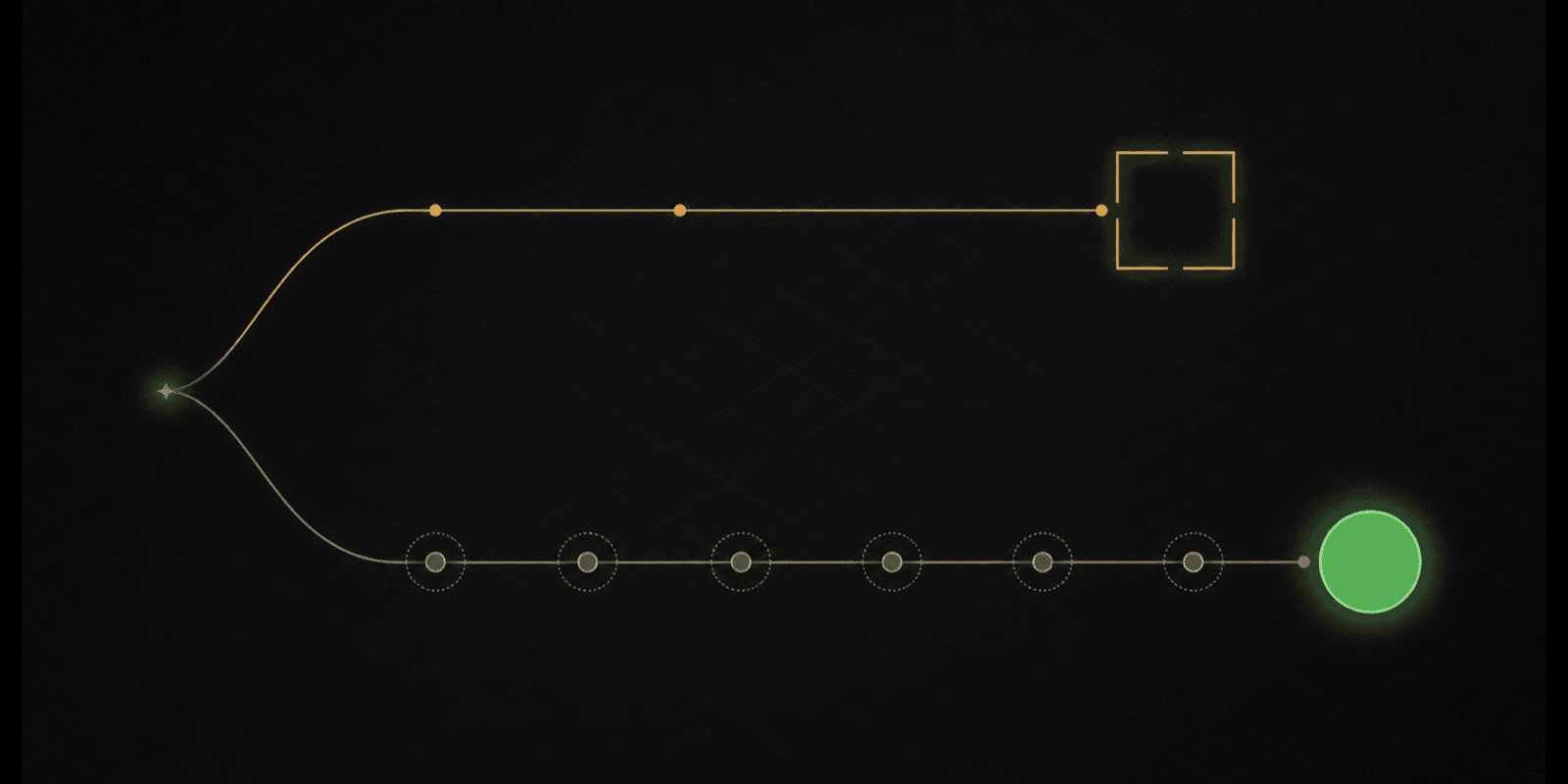
The shortcut reaches a convincing frame. The longer route reaches a dependable product.
Around the app sits a second system that makes it survivable:
- Truth: real data, explicit assumptions and no demo numbers presented as outcomes.
- Access: authentication, authorisation and a clear boundary between customers.
- Money: checkout, cancellation, refunds, failed payments and entitlement changes.
- Failure: logs, alerts, retries, reconciliation and a way to recover safely.
- Change: tests, migrations, preview deployments and rollback.
- Operations: documentation, support, backups and a known owner for every external dependency.
Google's 2025 DORA research on AI-assisted development describes AI as an amplifier of the system around it. With clear requirements, verification and release discipline, it increases throughput. With a prompt followed by a deploy, it increases the rate at which uncertainty reaches production.
4. Scope the MVP around one constraint
Several archived projects began as descriptions of the finished company: multi-tenancy, white-labelling, analytics, integrations and pricing tiers. Detail felt like certainty. It was scope.
The projects that moved furthest started from a tight constraint. Revenue Suite helps a Whop business recover otherwise lost revenue. Clipora turns video attention into an owned audience and a next action. Roundup Builder solves a repetitive school workflow with a clean Google Docs output.
As our guide to validating a SaaS idea before writing code argues: define the painful moment, the person experiencing it and the smallest observable improvement. Build that loop first.
5. Reliable SaaS is built at the integration boundaries
Clipora depends on identity, video processing, storage, image delivery, email, billing and deployment services. Revenue Suite sits inside a marketplace, receives external events, interprets membership and payment state, sends messages and attributes later outcomes. Each dependency has its own permissions, retries, outages, version changes and definitions of success.
The naive version of integration work is "call the API." The shipped version asks:
- How is the request authenticated and how narrowly is that credential scoped?
- What happens if the call succeeds but the response never arrives?
- Can the event arrive twice or out of order, and what state do we store first?
- How do we reconcile if the webhook never comes?
- Which result is authoritative when systems disagree, and did a green response produce the intended outcome?
This is also why we keep returning to the difference between uptime and outcomes in monitoring n8n workflows in production. A system can be online, return 200 and still fail to do the work that matters.
Integration edges deserve first-class models, logs and tests. Treating them as glue turns clean prototypes into unreliable products.
6. Reuse software decisions before sharing code
Every product should make the next cheaper to build, but not because every repository shares one giant foundation.
The most reusable assets were decisions:
- how environment variables are named and checked;
- how webhook signatures and duplicate events are handled;
- how access is separated from billing state;
- how production smoke tests and deployment instructions are structured;
- how a dashboard explains empty data; and
- how we distinguish observed revenue from estimated revenue.
Those patterns transfer cleanly. Whole engines often carry assumptions about data models, providers and plans. Extract one too early and the next product inherits those constraints under the label "shared."
Our earlier argument for the portfolio model still holds, but the foundation should begin as a shared operating method. Extract a package only after two real products need the same behaviour.
Copying a proven decision is leverage. Coupling two uncertain products together is debt.
7. Start SaaS distribution before launch
Some of the most complete projects had the weakest answer to a simple question: how will the first ten customers find this? That is product evidence, not a marketing task for later.
If you cannot identify where potential users discuss the problem or describe the pain in language they recognise, another month of engineering is unlikely to rescue the idea.
Begin distribution while the product is cheap to change. Publish the problem, show the rough workflow and ask for a commitment stronger than encouragement.
We covered the channels in distribution for builders who hate marketing. The archive adds a harder lesson: if the route to ten users is blank, the product is not ready for another major feature.
8. Know when to stop building an app
Archiving can feel like admitting time was wasted. The expensive mistake is keeping a project mentally alive because stopping makes the sunk cost visible.
A project can be technically good and still be the wrong business. Urgency may be weak, buyers hard to reach or the support surface too large.
The useful way to stop is deliberately:
- record what state the project is in;
- preserve its repository and local data safely;
- write down why it stopped;
- identify reusable decisions or assets;
- remove live infrastructure that still costs money or creates risk; and
- define what new evidence would justify reopening it.
That turns an abandoned app into institutional memory and frees the resource a solo founder runs out of long before ideas: attention.
What does shipped software actually mean?
After fifteen builds, our definition is no longer "deployed to a URL."
Software is shipped when:
- a real user can reach it and understand the promise;
- the core workflow uses real data from end to end;
- access and customer boundaries are enforced;
- money and entitlements remain correct through failure and cancellation;
- important failures become visible to the person who can act;
- changes can be tested, deployed and reversed predictably;
- the founder knows how the first customers will be reached;
- support and recovery have an explicit path; and
- there is evidence for continuing, not only enthusiasm for building.
Not every experiment needs to meet that standard. Prototypes can answer one question and stop; internal tools can serve one person perfectly well.
Calling all of them products hides the remaining work and encourages the next build before the current decision is finished.
Frequently asked questions
What is the difference between building and shipping software?
Building software creates the functionality. Shipping software delivers that functionality as a dependable user outcome. Shipping includes authentication, permissions, real data, billing states, failure recovery, deployment, support and a credible route to users—not merely a working interface or public URL.
Why do AI-built SaaS prototypes often stall before launch?
AI makes visible implementation fast, which can hide the amount of invisible product work remaining. The prototype may still lack safe customer boundaries, trustworthy data, edge-case handling, monitoring, migrations, recovery procedures and evidence that a reachable buyer values the outcome.
How can a solo founder ship software reliably?
Start with one painful constraint and define the complete user outcome. Build the smallest end-to-end loop, then verify access, money, data, failure, change and operational recovery in proportion to their risk. Begin distribution before the product is finished and make every deployment repeatable and reversible.
How many apps should a solo founder maintain?
There is no universal number. The limit is operational load, not coding speed. Count live dependencies, support expectations, security exposure and data risk. Keep only the number you can understand, monitor and repair without making every interruption a crisis.
The honest summary
AI has changed what one person can build. It has not changed what customers require from software they trust.
The solo founder's advantage is not unlimited code, which quickly becomes unlimited maintenance. It is moving from evidence to implementation with little organisational drag—if we stay disciplined about what deserves implementation.
Build quickly. Verify slowly where consequences are high. Put invisible systems on the roadmap. Begin distribution early. Reuse lessons before extracting platforms. Archive deliberately. Reserve "shipped" for software that can survive being used.
The takeaways
- AI compresses implementation, but judgment, verification and accountability remain founder work.
- A polished prototype can conceal most of the effort required to accept users, data and money safely.
- Shipping includes a second system around the app: access, billing, failure handling, change management and operations.
- Start with a painful constraint and a measurable improvement, not a description of the future company.
- Treat integrations as product boundaries, not incidental glue.
- Reuse proven decisions before trying to share whole codebases.
- Distribution is part of the build specification, not a phase after completion.
- Stopping deliberately preserves learning and returns attention to the portfolio.
Building something and unsure whether it is a prototype or a product? Tell us what you are working on.
References
- Stack Overflow (2025). Developer Survey — AI.
- DORA / Google Cloud (2025). State of AI-assisted Software Development.
- National Institute of Standards and Technology. Secure Software Development Framework.